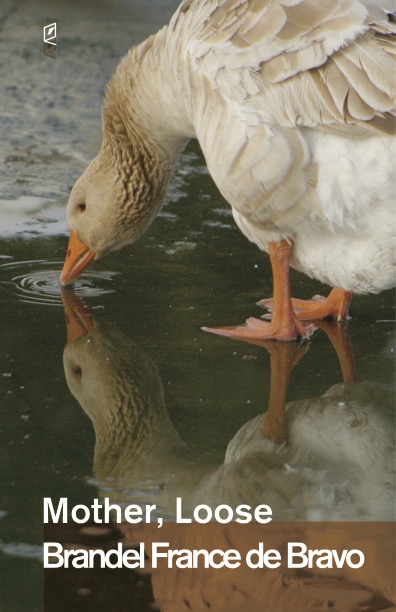
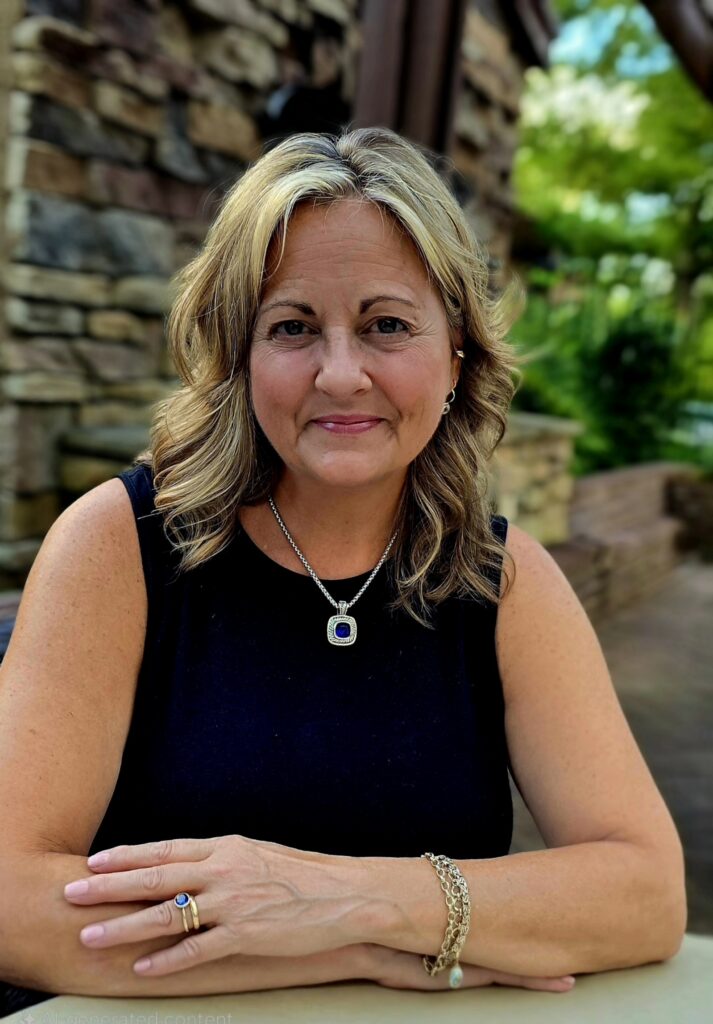
I like its cohesion—the combination of poems inspired Mother Goose rhymes with poems about the death of my mother.
What did you have to overcome to publish it?
The poems in Mother, Loose were part of a larger manuscript that ultimately did not cohere. I, consequently, decided to pare down the full-length manuscript and turn it into a chapbook. While it was hard to let go of so many poems, I saw that there were two kinds of poems that needed to be brought to the fore and that could complement one another. Once I made the decision to focus on “mother” in its two forms, I wrote additional poems toward that theme. Some of these newer poems ended up being distillations from essays I’d written.
What do you hope people learn/experience from the book?
I hope that Mother, Loose helps people see some of their most primal fears in a new light. Nursery rhymes, Mother Goose rhymes, and fairy tales help elucidate, normalize and lighten the burden of those fears, at times making light of them. Humor is a form of intelligence, and dark humor shows us how to live with death.
Favorite interaction with a fan or reader?
I think my favorite interaction with a reader was with a reviewer, the writer, Hannah Rodabaugh. She wrote a wonderful review of Mother, Loose in Pank that made me feel seen—as though my poems had truly landed.
What are you working on now?
My second full-length book, Locomotive Cathedral, came out last year (March 2025). It was selected in the Backwaters Press contest and published by Backwaters Press, an imprint of the University of Nebraska Press. It had been ten years since Mother, Loose, so I had a blast doing readings and am pleased with the book’s reception. Right now, I’m finalizing a new collection of poems titled Fade Away & Radiate, which address or write toward what Buddhists call “the five remembrances” (e.g. this body is of the nature to age; I cannot escape aging). I’m still adding and removing poems and working on the order but I expect to be sending it out by the spring of 2026.
Tell us the story of your Accents Publishing book, SIRENS AND RAIN.
Sirens and Rain is a book of haiku and senryu (haiku-like poems focusing on human nature) about life in and around Philadelphia. People, animals, trees, fountains, statues, trains, life in all forms as it reveals itself in quintessential moments. With its unique variety of human and (other) natural phenomena, I have found this city to be an ideal place to write these “sketches from life.” The poems in this book came to me over a number of years—as I walked to work, taught my classes, rode my bicycle around the Schuylkill River, and otherwise encountered city life. (Note: the word “haiku” is both singular and plural; the same is true for “senryu.”)
What do you like most about it?
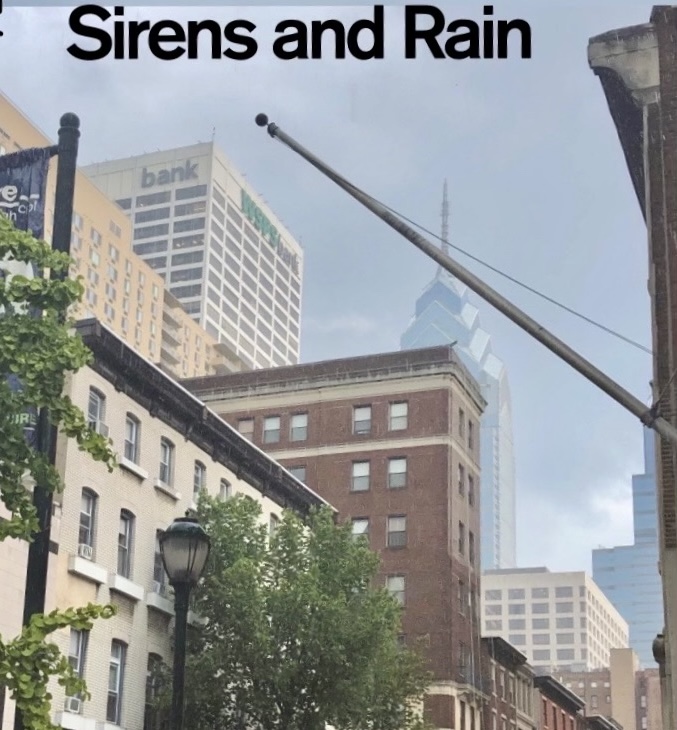
I like how the book is a history, in poetry, of what life was like for my wife, my cats, and me during the years we lived near the corner of 20th and Chestnut Streets. This is the intersection shown in the photograph I took for the cover. A few of the poems were written after we moved from there to another place just around the corner.
What did you have to overcome in order to finish and publish a book?
By the time I began working on the manuscript that became Sirens and Rain, I had plenty of haiku and senryu that could have conceivably been included. So the challenge was to select and arrange the best poems, or the best combination of poems, for the effect I wanted. Organizing by seasons helped; that way I could break the poems into five separate sequences (the four seasons plus a fifth chapter for late summer through early fall). In arranging the poems, I tried to juxtapose nature poems and people poems that played off one another in interesting ways. This entailed many rounds of revisions. You might say that the actual composing of the book was a matter of moving 3 X 5 cards around over and over again.
What do you hope people learn/receive/experience from reading your book?
As with haiku and senryu generally, I hope the poems in this book make readers more keenly, and in most cases more pleasurably, aware of what they encounter moment by moment in life. One of the best effects poems like these can have is to evoke for the reader a thought-feeling like, “Oh, I’ve had that experience—or seen that sight—a hundred times, but before never noticed it in all its beauty and wonder.” Or humor and charm, as the case might be.
What was your favorite interaction with a reader and/or a fan?
Because haiku and senryu can appeal so readily not only to poets and poetry enthusiasts but to folks who don’t often read poetry, I am always gratified when I learn that my brother-in-law, neighbor, landlord’s son, or high school Facebook friend “gets” and likes my poems. As for a specific interaction, I had an especially fulfilling one last fall when I visited a class that was reading Sirens and Rain as an assigned text for their Community College of Philadelphia literature course. Owing probably in no small part to how well their professor had guided their week-long study of my book, I found the students extremely engaged in and curious about writing haiku. They asked incisive questions. Then, in a kind of workshop format, I went around the room helping them with the short collections they were assigned to write. Almost to a person, perhaps TO a person, they were writing original haiku about subjects that mattered to them. As I left the classroom, literally, I felt a chill go down my spine. We had given a lot to one another.
What are you working on now? Catch us up one significant event in your life since the publication of SIRENS AND RAIN.
The most significant recent event in my writing life is that I just finished the manuscript that is the successor to Sirens and Rain. Entitled “Unofficial Portraits,” it consists of haiku and senryu that portray people by focusing on a moment or detail that is especially revealing about each person’s character. As with Sirens and Rain, the subjects span a range of settings, including work, education, neighbors, law and politics, sports, and family.
Is there anything you want to get off your chest about writing or publishing?
Why aren’t haiku about sports (other than baseball) more widely appreciated? Not a particularly pressing question but a pet peeve of mine?
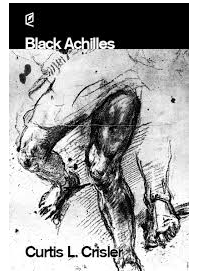
Tell us the story of your Accents Publishing book, BLACK ACHILLES. What do you like most about it?
What I adore most about Black Achilles is my collaboration with Katerina Stoykova and Accents Publishing editors and staff. Through collaboration, we achieved a poetic rendering of me severing my Achilles. By facilitating collaboration and community of the artwork, cover pages, and layout, we achieved one of my best-looking and formatted books I have to date.
What did you have to overcome in order to finish and publish the book?
Black Achilles came about when I tore my Achilles playing basketball for our university’s Homecoming Week. It was the Faculty vs. the Students. I was on the faculty. Everything went well through warmups. Then, when the game started, I ran up and down the court a couple of times before I heard what sounded like a gunshot. The body is an echo-chamber. I looked around to see if anyone else had heard it. No one did. Then, I tried to walk. My left foot flopped like a fish on dry land. One of my teammates’ husband observed me since he severed his. He told me that it was my Achilles by feeling the divot in my leg. I didn’t want to believe it, but I tore mine.
I would later have surgery—be in a cast, then shoe, then knee-cart to teach and be mobile. It was Christmastime. I laid on my back, left leg elevated on couch back, while my mother helped me convalesce. This book was about a man who felt he lost his demigod status for b-ball (alludes to Achilles). He fell to human—left with the troubles of inconvenience and frustration. The poems play in myth and realism—with each breath and rehabilitative step for mobility and functionality to rise back or at least return to a sliver of demigod. The collaboration to get the book to where it needed to be, along with rehabilitation, were two trains on two different tracks, near touching—one went east, the other west. To solve the equation for a black broken body—nebulous.
What do you hope people learn/receive/experience from reading your book?
I really enjoy the feedback I get from the book. Those who deal with body issues (disability and pain), functionality, along with identity, health, mental stability, and the two worlds that split you apart: past/future, now/then, and me/who, conflate themselves to a searching. Searching for who and what you will become from the ruins of the broken—the old body that has changed into a new body. You wonder if you will heal, or not. You think of those born with disabilities, those who become disabled, and those who never see either. Humanity stands alone. This was a reason for Kim Addonizio’s epigraph, “the wheelchairs hate the shoes,” from “The Way of the World.”
So, I played with the personification of inconvenience and frustration. I became Doc Octopus—Spider-Man’s nemesis—a Marvel villain. This came about because I wasn’t functional per usual after surgery. One time I got up off the couch and tried to walk, only to face-plant on the floor, on a comfortable rug. Below—a few excerpts of how inconvenience and frustration and Doc Octopus took over my life, my mind, and my psyche.
Overseer Inconvenience puts his arms around me. This hug weighs world-winds and begs like infidelity’s lip-
stick marks. He wants me to learn how to fall again. There’s no sophistication to hitting the ground. I do…
Or, how this barrage of doubt with the impending placement of inconvenience and frustration or Doc Octopus domesticated my mind, had me reeling in my rehabilitation. The good about it all, it gave me concepts on how to create and explore on the page. The above reveals itself in two more excerpts from Black Achilles, the first from “There’s This…”—
Scarred. There’s the little stalls, the reaching for the soap while on two new metal appendages. How basic science can hold you up. As Doctor Octavius you have one flat tire—one appendage disengaged—you can do nothing in your mania to stop Spidey. Scarred. The stress of another fail.
The second, as follows:
Date night Frustration and inconvenience crash “last call for alcohol,” as if someone cried out, “is there a doctor in the house?” As if they were both doctors. Frustration brings inconvenience home. You hear their rattling bodies going at it in the kitchen. You hear their angry love making cry out like stuck mad dogs. You hear them snore like grizzly things.
What was your favorite interaction with a reader and/or a fan? I guess the ultimate interaction would be with professors, lecturers, teachers, and poets/writers who enjoyed the book and used it in their curriculums or workshops. It’s there where questions arose about my poetics and creativity surrounding the book. It’s great to express how real-life situations can proliferate into a creative kaleidoscope of poetic endeavor. Also, to share the origin story of the book with those interested—priceless. It’s in that space where we can blossom. All interactions afterward are blessings!
What are you working on now? Catch us up on one significant event in your life since the publication of BLACK ACHILLES.
Currently, I am beginning my second term as Indiana’s Poet Laureate. It’s very fulfilling and arduous, simultaneously, but I enjoy bringing Hoosiers together via poetry. For the page, I am putting together a tentative manuscript called Imaginate. The word, “Imaginate,” came from an Eric B. & Rakim song called, “I Ain’t No Joke.” I’m trying to figure out if it will be a hybrid book, a poetry book, or a poetry book and a poetry chapbook. Still processing…
Is there anything you want to get off your chest about writing or publishing?
Writing is one of the best creative endeavors to address who and why we are us. We need more great writers. We need great publishers to publish great writers. We need more great humans too.
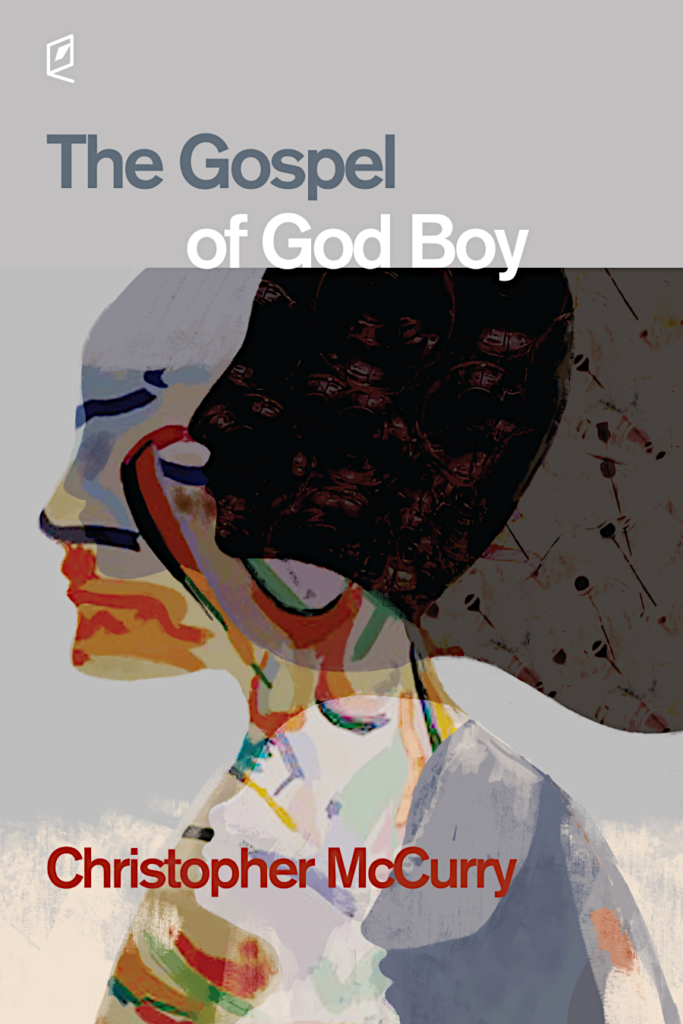
Tell us the story of your Accents Publishing book, THE GOSPEL OF GOD BOY.
It starts with being an older brother. What an awful and awesome responsibility that is. And I’ve got to be honest here, I really botched it up. I was mean, controlling, manipulative. I was a kid. I didn’t really understand how to be good. Eventually (and thankfully) I grew up and realized I had abused and misused my power. God Boy explores all that across themes of family, religion, myth.
What do you like most about it?
I like that it’s bloody. I like that it’s kind of alarming. Oh. I like when I read it to myself, I feel something deep and ancient working within it.
What did you have to overcome in order to finish and publish a book?
Fear that my loved ones would be mad. Fear that it wouldn’t be as good as my first book. Fear that even though I’ve thought about all of this and wrote about it, maybe I haven’t changed all that much, after all. Maybe, just maybe, we are all evil and spiteful and tiny.
What do you hope people learn/receive/experience from reading your book?
I guess I felt, and have felt for sometime, the effects of time. I’m not really sure that it heals all wounds, but that it provides context and counterpoints–counter examples. It gives spaces for growth, if you are lucky enough to get a lot of it. Opportunities for reflection and collection, correction. So, yes, in humanity there’s violence. We kill each other. And since this isn’t a book about the consequences, it can be a book about why and how to be or become a person who loves others.
What was your favorite interaction with a reader and/or a fan?
Well, I’ve got to say I love when my wife reads my work or is sitting in the audience smiling at me. That gives me confidence and peace. Recently, someone reached out after reading God Boy and asked to get a copy of my first chapbook ever published, Splayed. That was nice of them! I don’t have any more copies, so I couldn’t help them out, but it was still fun that someone wanted to read more after finishing my book.
What are you working on now? Catch us up one significant event in your life since the publication of THE GOSPEL OF GOD BOY.
The next poetry book will be a book of love poems, for sure. And I’d love to share my short stories with the world. Finish a novel I’ve been working on for awhile. I’m working with a team of teachers to draft a Literary Arts curriculum for 6th-12th grade. My son Ecton is a full goose. Abra is a high schooler and in the Literary Arts program that I teach. And I’m leading the Bluegrass Disc Golf Association as the President for 2026. To name just a few of the things I’ve got cooking right now.
Is there anything you want to get off your chest about writing or publishing?
Imagine if every middle and high school had a Literary Arts teacher. How cool would that be? Most people don’t know this, but we need Literary Arts/Creative writing to be included in the legislation that governs Visual and Performing Arts. With that we could start developing a robust system of literary arts teachers to introduce the art of writing from a young age and help those who develop a passion for it to hone their skill and craft.
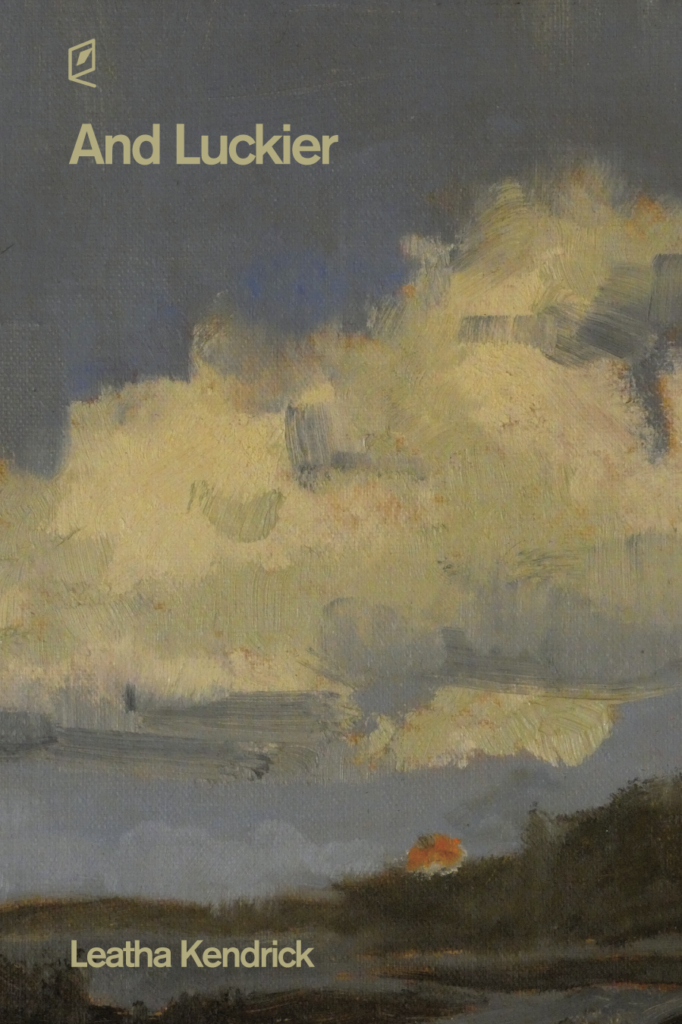
For me, making a book is a slow process of distillation and experimentation. I had been working on a collection for a couple of years when Katerina suggested in 2019 that I submit something to Accents. So the inkling of a new book had been hovering. Katerina’s interest in looking at a collection of my poems opened the way for me to sharpen and focus what coalesced into And Luckier. Without her being there to receive this book, I might have gone on tinkering with the collection for another year. As a matter of fact, when I published Almanac of the Invisible in 2014, I already had begun to gather poems for the next book, and I had written the title poem. I revise individual poems over the course of many years. As I write new poems, my sense of each collection sharpens and refines itself. It is not an efficient process, but one I have come to love and to give myself over to.
What do you like most about it?
More than my earlier collections, And Luckier balances personal poetry with poems that engage world events. Though the poems were written before the pandemic, many of them still feel timely. Katerina’s books (her own poetry) inspire me to push boundaries, and her gentle presence as editor encouraged me to experiment. Another thing I loved about working with Katerina was that despite the fact the And Luckier came out in March, 2020, as the world was closing down, she stayed upbeat and inventive, making sure that the poems were heard widely on YouTube, the radio, and via Zoom.
What did you have to overcome to finish and publish a book?
By the time I published And Luckier I had a certain amount of faith in my own process. I had learned to believe that the book would find its shape and its place in the world eventually. However, I had to overcome the frustration of working through many drafts over several years and wanting it not to take so long between books. As I look back on those drafts now, I see that I was rushing the collection. Many of the best poems in the book were written in 2018-19. The 2017 version would have been a different book, and not as strong as the book Accents published.
What do you hope people learn/experience from reading your book?
I always hope to present readers with a range of poetic forms and a variety of ways to encounter experience, including humor and playfulness. I do not hold onto expectations for what any reader might learn from my poetry. Instead, I think in terms of giving readers a chance to be surprised or delighted or moved to look at something a little differently. These are the things I hope for when I read poetry.
What was your favorite interaction with a reader and/or fan?
Some readers have written to tell me they are grateful for my poem, “No Fear”—particularly for its realization that it’s “impossible to separate/misery and joy—the living edge of mystery.” That line, that understanding arrived with the poem itself. It was what the poem had come to teach me, and I will always be grateful for its arrival.
What are you working on now? Catch us up on one significant event in your life since the publication of AND LUCKIER.
I don’t really think of myself as a prolific writer, but I am always writing and nearly always imagining how new poems might fit together. Each time a book comes out, I will already have the start of another collection in process. I am usually working on two or three things at once. Right now I am in different stages of working on two poetry collections, as well as writing occasional essays and doing research for another project. In the past year I have had essays accepted for two anthologies, and the year before I published a long scholarly essay.
In July, 2025, I signed a contract with Madville Publishing for a new collection, entitled Interior with Poplar. The first week January, 2026, we finished final edits. The book is slated for release in September, 2026. It is my fifth full-length collection of poems.
Tell us the story of your Accents Publishing book, GOODBYE, BABY.
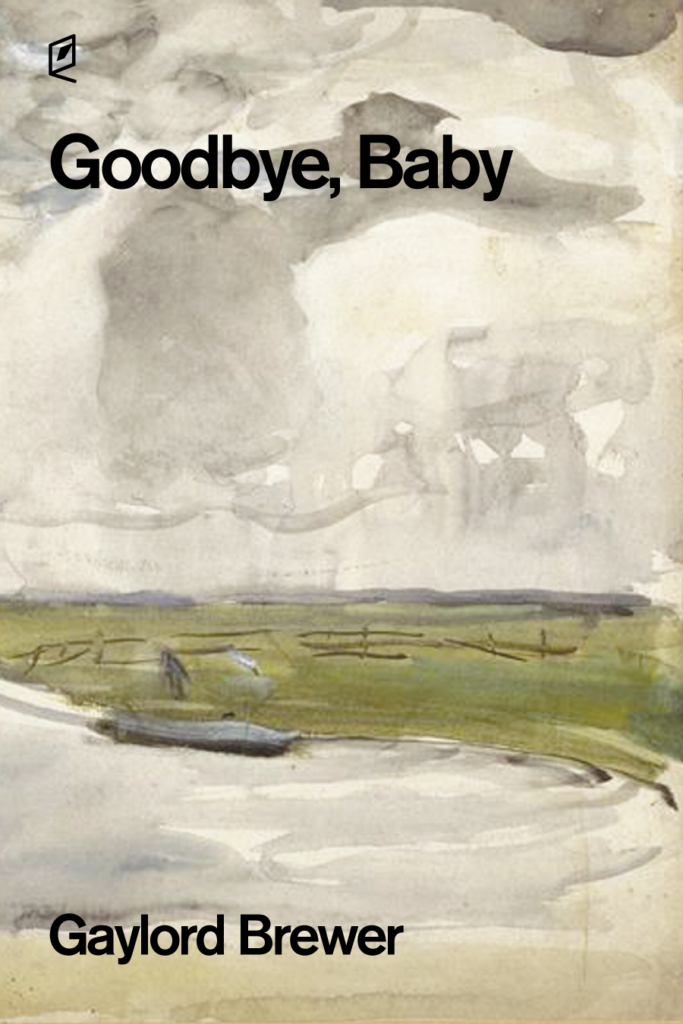
The genesis of the poems is as transparent at it seems: the frail and painful final weeks of my beloved dog Lucy and the months of grieving that followed her death.
What do you like most about it?
“Like” perhaps isn’t the word to use in the context of this book, but writing it provided an outlet that I apparently needed during those sad, angry, helpless, terrifying days.
What did you have to overcome in order to finish and publish the book?
I was writing compulsively over the course of those months, and at some point it occurred to me that the poems might constitute a book. That was a by-product, not an initial goal. One element unique to this collection is that I’d never before written a book dictated by form. All of the poems are twelve lines and untitled. The latter seemed a self-evident decision. These were intimate, compressed poems, on-going and in conversation with one another, and individual titles seemed too much of a … what, pronouncement? Too sharp a demarcation from piece to piece. The more arbitrary choice—and I don’t recall how or why the idea came to me—was the restriction of the twelve-line structure, which ultimately served several purposes. For one, each poem was a puzzle for me to solve, to expand or more often contract to a contained, companionable size. I was desperate for both distraction and for some semblance of control in a world we’d lost control of.
What do you hope people learn/receive/experience from reading your book?
I’m suspicious of wanting anyone to “learn” anything from a sequence of poems, but these are obviously close to the heart, so I’m gratified that folks seem moved by them. Every poem in the book, by the way, however seemingly far-ranging in tone or subject, is actually about Lucy and losing her. Stating the obvious, perhaps. Trust me.
What was your favorite interaction with a reader and/or a fan?
In the context of GOODBYE, BABY? Well, the book’s only recently published, but it’s been more pleasant than I expected to get emails from friends—friends from different periods of my life and vastly different contexts—whom I haven’t been in touch with for years or even decades. I’ve been living an increasingly withdrawn and private life, so a few knocks on the door from the outside world, some friendly overtures from the past, are okay.
What are you working on now? Catch us up one significant event in your life since the publication of GOODBYE, BABY.
Another book of poems, Negotiable Gods, is coming out later in 2026, of this book’s heels. It contains pieces written during the three-four years before the intense period that generated Goodbye, Baby. So, the books are appearing out of order, which disconcerts me a bit, although I suppose no one will notice or care. Aside from writing, I’m looking forward, if I ever have the chutzpah to retire, to getting back to drawing, painting, working with clay.
A significant event?
I just put down a sizeable deposit on a trip a year from now, swimming with humpback whales for a week in the Dominican Republic. We’ll see if I have the nerve, or the body, to go through with it. Not a bad way to die, though—slapped unconscious by an errant flipper and returned to the dark, cold depths whence I came! I hereby leave all my posthumous poems to Accents.
Tell us the story of your Accents Publishing book, UDDER UPROAR.
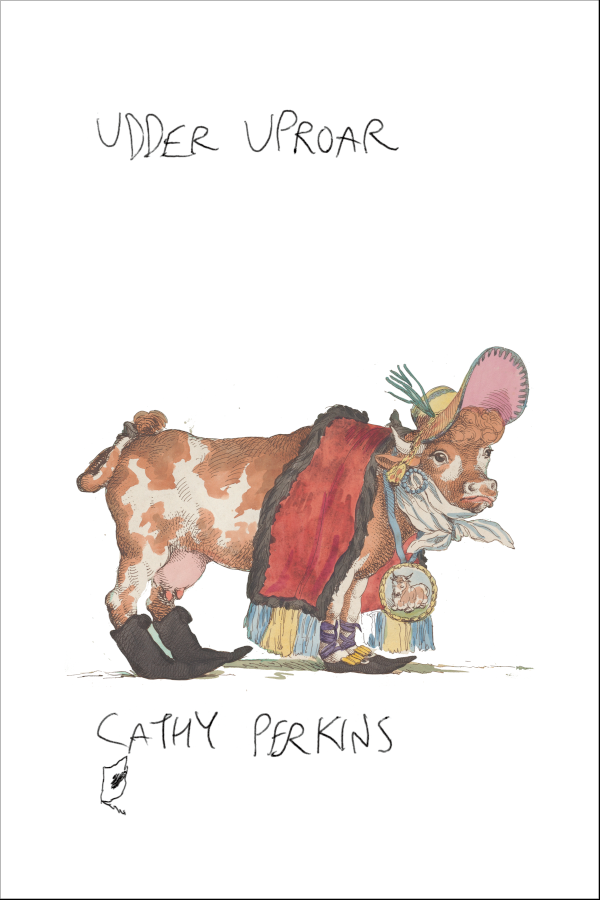
I love to write and do so almost every day since my first head injury back in 2000. In fact, my brain started to think in rhyme (not unusual for concussives, that is if they remember to think). When I decided to attempt to compile a collection and try to get it published, I knew I wanted it to appeal to the masses, poems people would actually read and enjoy. Since I seem to have a propensity to add irony, humor and sarcasm to my thoughts and writings, I decided to make a book filled with poems that filled this bill, although I’m slightly sad Udder Uproar is more of a chick magnet than a book that appeals to all sexes. But my mentors say, write what you know. Udder Uproar, my first and so far, only collection of poetry, is filled with waves of inane, love, loss and whatever else tides in my brain. All original poems by me without the help of AI (except for possible research answers), are ideas and observations written in my unique unstylish style, free form and untraditional. In 2022/2023 I attended Katerina Stoykova’s Poetry Boot Camp, 6 months of writing, revision and education. At the end we were supposed to do a manuscript exchange. Fortunate for me there was an uneven number of us to exchange with so Katerina decided she would read my collection. Katerina got back almost immediately with her desire to publish it. First, she said it was a full-length collection, but after many cuts, Udder Uproar was birthed as an in between chapbook and a tome of poems.
What do you like most about it?
The poems in Udder Uproar reflect my thoughts and observations, full of alliteration, assonance, nonsense, humor and rhyme. These poems are just snippets of the buds blooming daily inside my world. The cherry on top (cliché) is that Katerina Stoykova, Accents Publishing owner and founder, published it, meaning what I love the most about this collection is Katerina. Her bravery to go where few dare, publishing non-traditional people (or whatever you want to call people who don’t follow “the rules”), and subject matter shows me her generosity and open-mindedness.
What did you have to overcome in order to finish and publish a book?
Me. I am my own worst enemy. In the world of horses, I never doubted my ability to perform my duties at the highest level possible, within the industry’s confines. But, as a human around humans, I am filled with self-doubt, distrust of others, and the fear I am not good enough. When in the barn or a stall or on a horse’s back these concerns were non-existent. If I couldn’t fix a horse, I knew who to call to help me find the answers. If I couldn’t gallop one, I knew how to compromise with the animal, to work our differences out, or find a better suited rider. I have been unable to control my life with humans this way. I don’t know how to ask for help, who to trust, don’t understand why humans lie to humans. I am afraid of humanity.
What do you hope people learn/receive/experience from reading your book?
I hope when people read my poems they will laugh, smile, say, Me too, and discover I am the kind of writer who even though I try to hide loving emotions I am filled with love, gratitude and yes, even anger at some of the shit life throws my way. I hope my readers will see how it is possible to change the way we see things, so instead of stress, anxiety, depression, they know there is light shining somewhere, even if that somewhere is inside the cranium.
What was your favorite interaction with a reader and/or a fan?
I had one reader order 10 copies. They sent me a list of every person they were going to gift it to and asked me to write a limerick or a little ditty for each person. They put zero restrictions on language or content. It is an amazing feeling to think one is being accepted for who they are and to be trusted to be that person.
What are you working on now? Catch us up one significant event in your life since the publication of UDDER UPROAR.
Since the publication of Udder Uproar, 01/2024, I’ve been working on healing (I keep falling and breaking bones in my left leg), rebuilding strength, getting back to work, of which I am very passionate about because work allows me breathe freely (cliché) and lets me shove my fears to the back burner and wallow in mowing grass and being out in the open. When I write it is always from the inside looking out. I spent the winter of 2024 trying to compile another collection, but I kept running away from the stress, the extreme anxiety from reading poems I felt were less than anything anyone would want to read. I got bogged down in the constant revision after revision. I took longer and longer naps. I meditated more and more, until I was able to spend an entire day avoiding working on a book. Once again, I am working on my 2nd publication. I have many serious poems I would love to share with the world, but the competition is fierce, and since I love humor and words and ridiculous words, big words, words most people don’t even know exist or how to pronounce (me included) and then use those words in poems, I decided the alphabet and words might make a good book. These poems are the closest I’ve come to writing in a theme, and that is the next, boring (Lord, I hope not) collection I working on. I also write limericks, and like to write political limericks, too (and dirty ones) and maybe one day I’ll have enough for a collection.
Is there anything you want to get off your chest about writing or publishing?
You ask if there’s anything I want to get off my chest about writing and publishing and the first thing I think of is how hard writing for publication is, especially if someone writes for their own enjoyment, are relatively unknown in the publishing world, or are reclusive (as many writers are). It is hard to break through, to open doors to the unknown, to sell oneself (pitch and market) and to follow all sorts of protocol, and rules, and then to submit. Relying on talent and good work is not enough to sell well, to be noticed, to be read and read again. And now, when few people read actual books there’s the challenge of trying to be a virtual/viral sensation, meaning for poems to be read I believe a poet must be able to sell them by reading them to whoever and doing it on social media. And that means investing in quality sound recording equipment or going somewhere to record and then figure out where to place and sell them to the quick fix generation.
Publishing appears to be an expensive folly, almost Sisyphean, meaning the time and energy it takes to create, submit, rationalize putting yourself out there for rejection, dealing with rejection, marketing and selling books with the greatest gratification coming from getting it done.
Tell us the story of your Accents Publishing book, WOE & AWE.
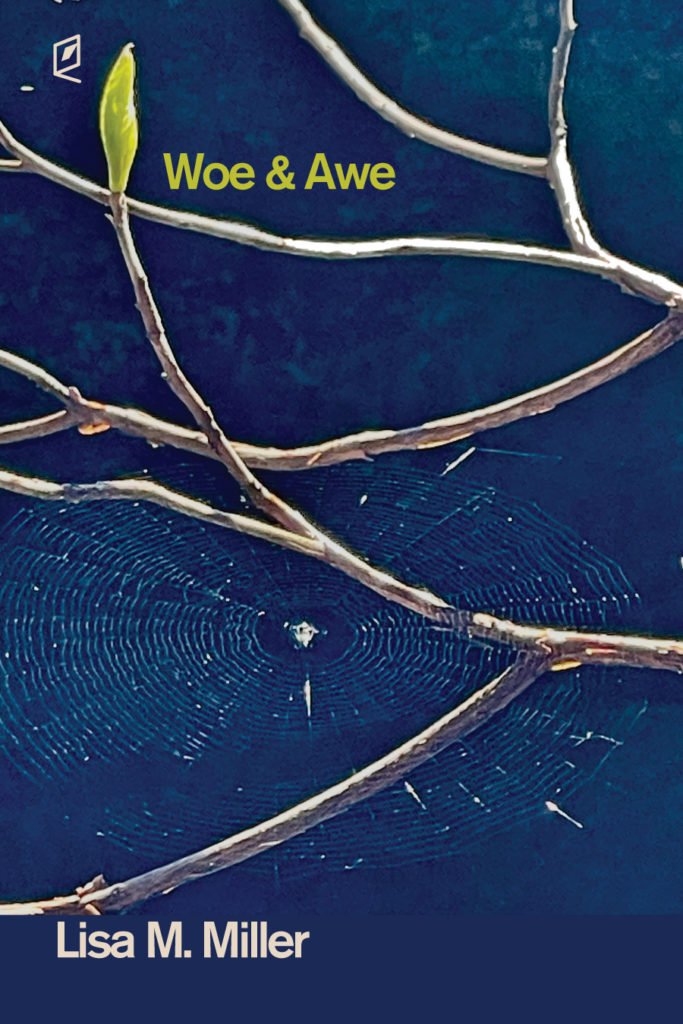
Katerina’s Poetry Bootcamps made me do it! I don’t know if it’s possible to develop writing skills without the constructive criticism and support of community; without Katerina’s mentorship, I’d still be looking up the meaning of fancy poetry terms like “enjambment” and “caesura” and “quatrain.” This is the story of Woe & Awe‘s unfolding—it’s voice and physical body in the world are a result of slow writing-muscle growth.
What do you like most about it?
I love how art, whatever its form, allows the-something-greater-of-life to be expressed through human beingness and is so often a balm for the ailing human spirit. When I’m struggling, making art for its own sake and spending time in nature, brings me home to myself. Woe & Awe is a raw and honest poetry memoir about hardship and healing. I really like that the work helps others to see their own stories of perseverance and the unrelenting green of hope. Yes, shit happens, but it’s not all that happens. And anyway, everyone knows that shit is fertilizer.
What did you have to overcome in order to finish and publish a book?
I overcame the inner critic, some poetry craft learning curves, and then several vulnerability hangovers after it was published.
What do you hope people learn/receive/experience from reading your book?
Here’s my sincere-corny-effective response to this question: I hope readers are encouraged to look at their own stories as interesting chapters so far—whatever the details—and realize that what comes next is yet to be written. Write it.
What was your favorite interaction with a reader and/or a fan?
I find the microphone intimidating and have felt supported throughout Kentucky, promoting the book. I had my first drunk-heckler last year and he yelled things like: “Yah! You tell it like it is, girl!” and “That’s what I’m talkin’ ’bout!”, and I hope this will happen to me at least once a year from now on.
What are you working on now? Catch us up one significant event in your life since the publication of WOE & AWE.
It was both the Accents Poetry Bootcamp 2023, and the Appalachian Writer’s Workshop 2023, that made me realize I want to formally learn what I don’t know that I don’t know about poetry, so I applied to the MFA program at Spalding in Louisville, and graduated in November 2025. My first book is full of Bootcamp and first semester work; my graduating thesis is a second poetry collection (still evolving). Through a grant from the Kentucky Foundation for Women, I facilitate art-making and poetry-writing in under-resourced communities of women in Kentucky; I‘mcertain that Woe & Awe and my MFA credential have helped open that door.
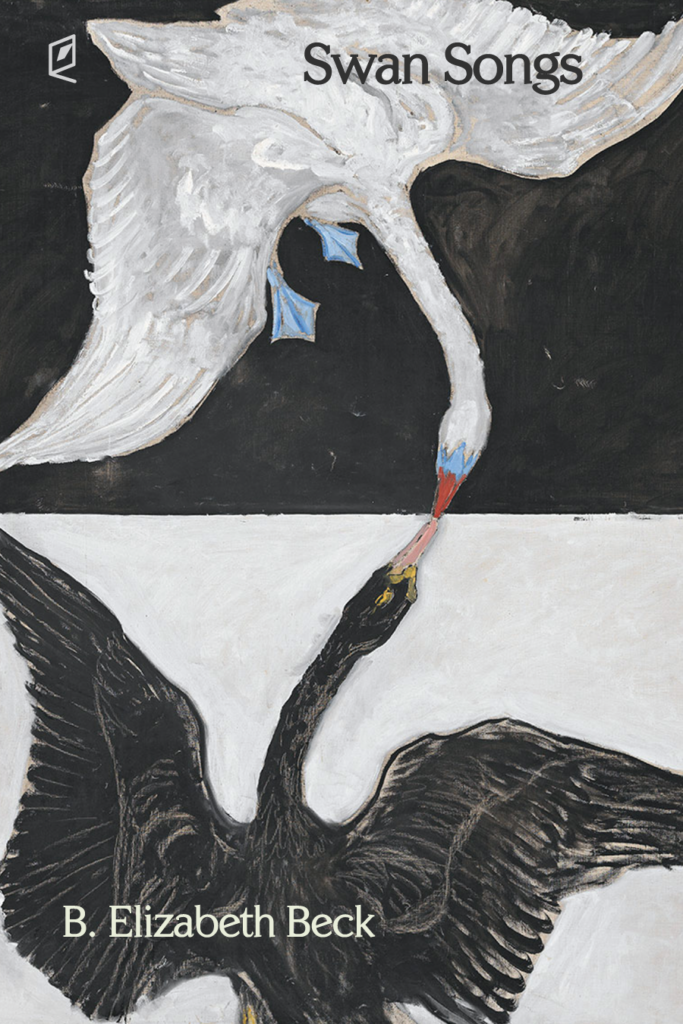
Tell us the story of your Accents Publishing book, SWAN SONGS.
Swan Songs was originally a braided manuscript, weaving poetry and stories. I submitted it to Katerina, who liked the stories to stand alone. She and I worked to edit and polish the stories for publication. In the meanwhile, I submitted the poems to Rabbit House Press, who published them in a collection called Dancing on the Page. I feel very fortunate both publishers trusted my work and did such a wonderful job with the books.
What do you like most about it?
Swan Songs is a feminist collection. The stories detail women’s relationships with themselves and others and are political in nature. Each story is framed by a musical artist. The stories are not about the artists, they work as a framing structure and extended metaphor. It was such a delight to research the music to write the stories.
What did you have to overcome in order to finish and publish a book?
Managing time and committing to a manuscript takes dedication. My books evolve over years. Some were written within months, but the editing process takes years, careful consideration, and excellent editors like Katerina Stoykova to be ready to land in readers’ hands.
What do you hope people learn/receive/experience from reading your book?
I hope that women readers experience that nod of recognition in the authenticity of the stories. I hope that music fans enjoy the way I weave music within the text. And I expect that Phish fans find the Easter Eggs in the collection.
What was your favorite interaction with a reader and/or a fan?
I always feel honored when readers send/post reader pictures. What a delight to see my books in the world.
What are you working on now? Catch us up one significant event in your life since the publication of SWAN SONGS.
I am working on a collection of essays about cooking. I’m in the research phase, offering a writing workshop at the Carnegie Center this spring called: Culinary Love Letter to inspire me to shape my essays with recipes. I’m not sure where it is going, but I’m enjoying the process. I’m still engaged in Ekphrastic Writing and am excited to offer Ekphrastic workshops in January through Accents Publishing and the Carnegie Center as well as workshops offered through the Kentucky Humanities Speakers Bureau.
Is there anything you want to get off your chest about writing or publishing?
The publishing world can be demoralizing so connecting with a writing community is very important. I’m so proud of my monthly poetry series, Poetry at the Table at Kenwick Table. 2026 marks the third year of this series and the community that has developed is incredibly valuable to me. I am proud to report that I have all the features booked for 2026 and can’t wait to meet each month for the inspiration the series provides.