Tag Archives: Accents Publishing

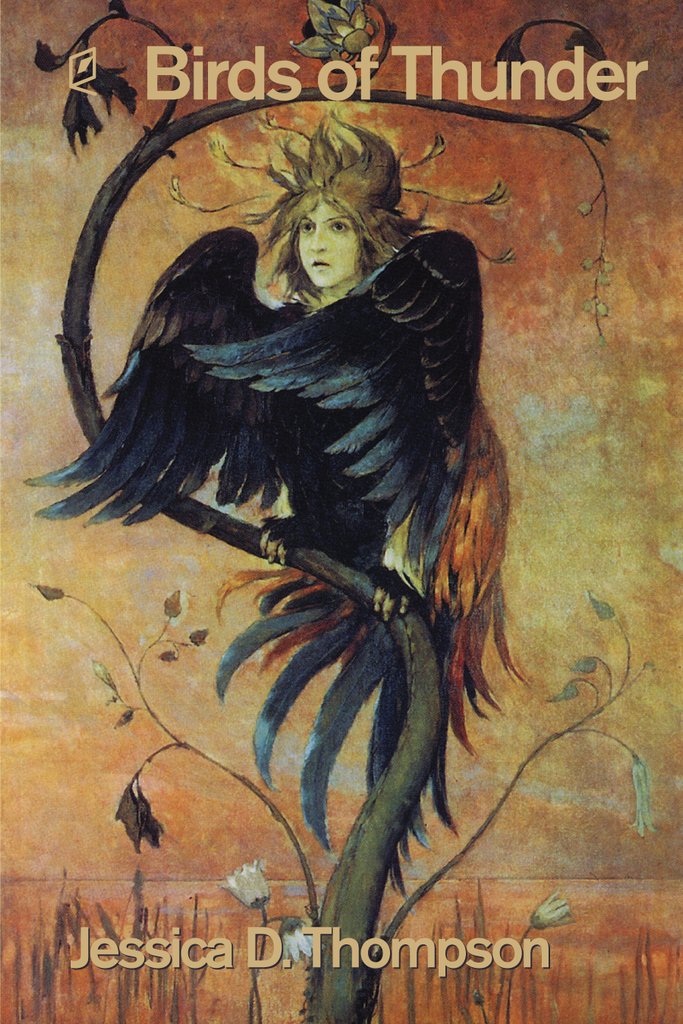
B. Elizabeth Beck and Swan Songs

Tell us the story of your Accents Publishing book, Swan Songs.

Swan Songs was originally a braided manuscript, weaving poetry and stories. I submitted it to Katerina, who liked the stories to stand alone. She and I worked to edit and polish the stories for publication. In the meanwhile, I submitted the poems to Rabbit House Press, who published them in a collection called Dancing on the Page. I feel very fortunate both publishers trusted my work and did such a wonderful job with the books.

What do you like most about it?

Swan Songs is a feminist collection. The stories detail women’s relationships with themselves and others and are political in nature. Each story is framed by a musical artist. The stories are not about the artists, they work as a framing structure and extended metaphor. It was such a delight to research the music to write the stories.

What did you have to overcome in order to finish and publish a book?

Managing time and committing to a manuscript takes dedication. My books evolve over years. Some were written within months, but the editing process takes years, careful consideration, and excellent editors like Katerina Stoykova to be ready to land in readers’ hands.

What do you hope people learn/receive/experience from reading your book?

I hope that women readers experience that nod of recognition in the authenticity of the stories. I hope that music fans enjoy the way I weave music within the text. And I expect that Phish fans find the Easter Eggs in the collection.

What was your favorite interaction with a reader and/or a fan?

I always feel honored when readers send/post reader pictures. What a delight to see my books in the world.


What are you working on now? Catch us up one significant event in your life since the publication of Swan Songs.

I am working on a collection of essays about cooking. I’m in the research phase, offering a writing workshop at the Carnegie Center this spring called: Culinary Love Letter to inspire me to shape my essays with recipes. I’m not sure where it is going, but I’m enjoying the process. I’m still engaged in Ekphrastic Writing and am excited to offer  Ekphrastic workshops in January through Accents Publishing and the Carnegie Center as well as workshops offered through the Kentucky Humanities Speakers Bureau.

Optional bonus question: Is there anything you want to get off your chest about writing or publishing?

The publishing world can be demoralizing so connecting with a writing community is very important. I’m so proud of my monthly poetry series, Poetry at the Table at Kenwick Table. 2026 marks the third year of this series and the community that has developed is incredibly valuable to me. I am proud to report that I have all the features booked for 2026 and can’t wait to meet each month for the inspiration the series provides.

Jeremy Paden and How to Recognize God’s Chosen

Tell us the story of your Accents Publishing book, How to Recognize God’s Chosen.

What do you like most about it?

Honestly, it is hard for me to say what I like. In fact, I tend to focus on the things I don’t like, regardless of what it is that I make. Few are the dinners where I don’t lead with a set of criticisms or a list of things I would change the next time I make it. I think somewhere along the way, I picked up the idea that modesty turns away from the self. And so I have overcompensated. But, in an effort to answer the question, the collection was conceived as a long fragmented poem and the fragments to speak to each other across the collection and the collection builds on itself through foreshadowing and repetition. The collection values uncertainty over certainty. Indeed, the harshest criticism is reserved for those who are certain and who in their certainty are blind. And so with individual moments. For example, fire, stone, water, seed, and other elemental things appear and reappear throughout the collection and rarely are just one thing. Even the final denouement both resolves a good number of the tensions that run through the book and still opens up to mystery rather than answers. 

What did you have to overcome in order to finish and publish a book?

There are mundane things like editing individual poems, like the sequencing of poems and then the editing of poems again once the collection is arranged into a book. These are things you have to learn by doing, by reading, and then by arranging and rearranging. And they are challenges that you must face in order to arrive at a book that might get published. And those are all real challenges. And maybe others have tricks that they use to check the readiness. But, I never have. There is something in me that sees those and runs the other way from them. This is not to say that my approach is right. It’s probably not at all, and it is certainly not as efficient. But the thing I have had to overcome and I have to overcome it with every book is a persistent self-doubt. There is, of course, the doubt that accompanies all writing, but then there is another when it comes to publishing. 

Twelve years ago Katerina published my first chapbook, Broken Tulips. Three years after that Broadstone published my second chapbook, ruina montium. My first full-length collection and fourth over-all book, world as sacred burning heart, was published by 3: A Taos Press in 2021. That same year Valparaíso Ediciones, a Spanish publishing house, published Self-Portrait as an Iguana, a bilingual collection of poems that I wrote in Spanish and translated into English after co-winning a publication prize contest. Almost every single book I have published, including how to recognize god’s chosen, has made several rounds of open-reading periods and contests before finding a home. That means countless nos before the yes. In this sense it’s not different from most everybody.  

But I think that when we look at others we see their list of accomplishments and we don’t look at the struggle and the self-doubt that stands behind each and everyone of their published books. That self-doubt shows up in many ways: wonder about one poem or another, about the arrangement, about subject matter.

What do you hope people learn/receive/experience from reading your book?

I wanted to speak a word of peace, a word of love, a word of mercy in a time when it seems that we prefer to speak our bitterness and our grievances. That said, there is a thread in this collection that is critical, critical of the hypocrisies that often seem to attend those who claim they are pious, those who readily claim to be among God’s chosen and who in their self-certainty exclude others. Still, what I wanted to say is that we are all beloved, all of us have been chosen.

What was your favorite interaction with a reader and/or a fan?

At the Kentucky Book Festival a reader came for me to sign a book she had already purchased, as we chatted, she opened it up and I saw the collection was underlined, highlighted, and glossed. Seeing that in itself was an amazing compliment. But, she wanted to read to me her favorite section, and as she did she teared up. There were a handful of lines that spoke to her deeply in her current season of life. That anything I write would move someone is humbling. Another favorite was when my wife told me that she felt that I had a different relationship to these poems than to anything else I’ve ever written. 

What are you working on now? Catch us up one significant event in your life since the publication of How to Recognize God’s Chosen.

I always have three or four projects going on at one time. Or, at least that has been the case for about the past 15 years. I think there are a couple of reasons for this. First, I understand books as coherent projects rather than receptacles of poems written. Second, I write poems in both English and Spanish. And third, because I am nobody. Being nobody means that a collection of poems of mine once written can take a while to find a home. I don’t lament that in the least. That lag time lets me put the poems down, forget about them, pull them out and tinker with them. For example, how to recognize god’s chosen was shortlisted for a chapbook prize with Tupelo Press in 2018. When I heard back no, I sent it out a few more times and then sat on it for a few years. In the intervening years between 2018 and 2024, when Katerina picked it up, I ended up expanding the chapbook into a full-length. During that time I wasn’t just tinkering and waiting for those poems to find a home. I was writing other poems as well. In fact, in 2020 I published Under the Ocelot Sun with Shadelandhouse Modern Press, a bilingual, illustrated children’s book (that I wrote in 2019), and in 2021 I was fortunate to publish two books: world as sacred burning heart with 3: A Taos Press (a book that I had been writing for about 10 years) and Self-Portrait as an Iguana with Valparaíso Ediciones (a book that has poems that were first drafted in 2000). Self-portrait, while a bilingual collection, was mostly written in Spanish. 

So, right now, I have a collection of poems in English and another one in Spanish, as well as several translation projects underway. Plus, I am waiting for a book of poems in Spanish to be published and I am also waiting on the illustrations for a bilingual Abecedarian Bestiary of Central America to be finished so it can go to press. Had things gone according to my plans and what I had been told, both the Spanish collection and the bestiary would be published. But, that is the other thing about publishing, nothing works on your timeline. Patience is a necessary virtue. 

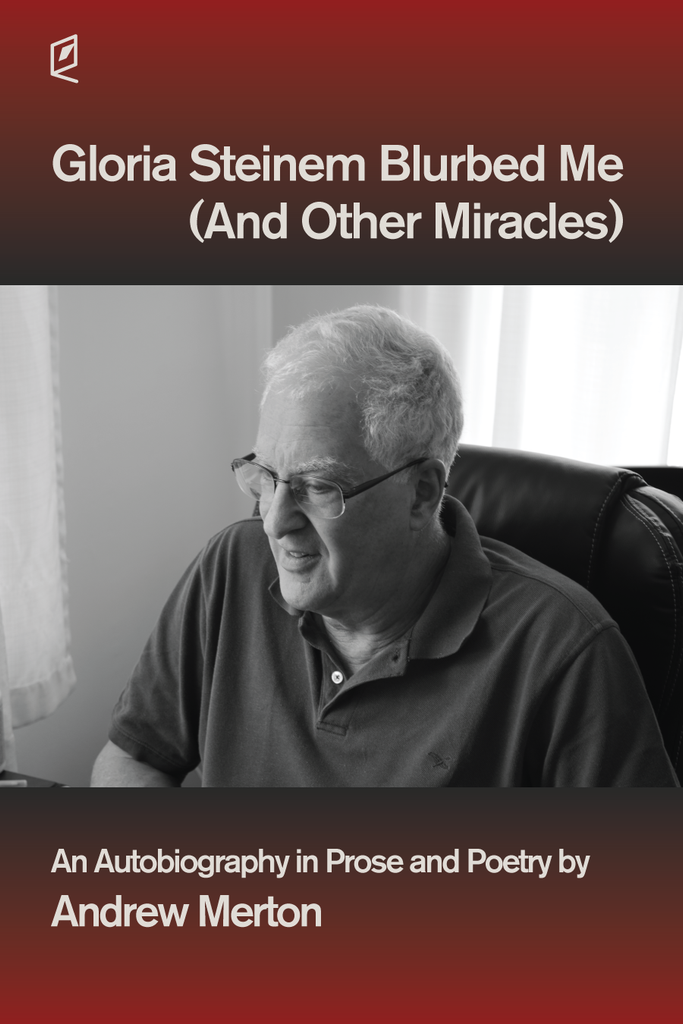
Karen Schubert and The Compost Reader

Tell us the story of your Accents Publishing book, The Compost Reader.

The first iteration of this manuscript was my MFA thesis, with the working title In This Light. I sent it out to a round of contests, and later exchanged manuscripts with some poets I admire. Barbara Sabol, such a generous and astute reader, noted that the “I”; in the manuscript made shifts that were disorienting. I re-edited the collection, rewriting some poems in 3rd person. Where characters recur, I arranged poems in chronological order and infilled with non-biographical poems.

Meanwhile, my concept chapbook manuscript I Left My Wings on a Chair won the Wick Poetry Center chapbook prize, and that led me to believe that surreal prose poems were a strong suit. Left to my own devices, my poems are oh so earnest, very sigh, and I think it was a memetic workshop in grad school that led me to the joy of trying out many voices, getting at an idea by building a weird world around it. I love the work of Mark Levine, Nin Andrews, Mathias Svalina, so many. I rearranged the manuscript again and centered those poems. For example the title poem, “The Compost Reader”; imagines a professional seer you can hire who will open your compost bin and tell you deep truths about yourself. Gah, so fun to write.

I sent the manuscript out again and was finalist at presses I wildly admire like The Word Works and Two Sylvias Press, what a thrill. Meanwhile, I reconnected with Katerina, whom I met some years ago at AWP, and she asked me what I was working on. I sent the manuscript to her and was over the moon when she said yes. I love Accents Publishing and the important work Katerina is doing in contemporary letters.

Surreally, the book came out during the pandemic lockdown, and that led me to realize there was a need for an online reading series for new books that were coming out in that moment. So with Nin Andrews, Lit Youngstown ran the New Book News series, readings that are archived on Lit Youngstown’s YouTube channel. What an honor, and I have since been able to invite some of those amazing authors to Youngstown.

What do you like most about it?

What I like most, from this vantage, is that the manuscript was not accepted until it had a more completed shape and narrative arc. I don’t remember who calls this editing in public, something like that. Not my intention. Each time I sent it out, it seemed finished, but somehow, when an editor doesn’t select a poem or manuscript, I can see it in a fresh way. Katerina as an editor has a sharp eye and made terrific suggestions, and I also found a few sloshy spots and she was generous about allowing me to continue making changes right up to the final final final. That was what I was really hoping for with my first book, that I’d find an editor who really cared about the work.

And allowing me to select my cover artwork was absolute joyful gravy. I had been in residence at the Vermont Studio Center with the stunningly talented printmaker Mary Gordon McFall, and Mary graciously said yes to her artwork on the cover. I love the rich ground of the image, and it’s no surprise Mary lives on the Kansas prairie and brings an eye to the depth of growth and regrowth.

What did you have to overcome in order to finish and publish a book?

The years I spent editing and submitting I was teaching as an adjunct and then working in cafés while building Lit Youngstown, so a submission fee represented a substantial expense. I would budget one submission fee per paycheck. And the around-the-clock nature of teaching and non-profit administration makes it hard to set aside quiet head space for the work of writing.

What do you hope people learn/receive/experience from reading your book?

Life is such a wild ride, I hope someone reading my book spends a moment in their own wild ride stories, and in that way of fellow travelers, we connect.

What was your favorite interaction with a reader and/or a fan?

I was invited onto an AWP panel of first book publishing over the age of 50. I was floored when, after the panel, there was a line of people waiting to talk to me, and they bought all of the books I brought. I love that inclusive nature of writing, the way experience and perspective serve us, rather than sideline us, those who are lucky enough to have more years to live and write.

What are you working on now? Catch us up one significant event in your life since the publication of The Compost Reader.

I am working with some artists on a new initiative, LOOP Youngstown Arts + Culture, and we are under contract for a building! In addition to dozens of artist studios and support for artists, there will be space for arts nonprofits like Lit Youngstown to work and grow in an arts-rich environment. These kinds of centers are happening everywhere, but this will be Youngstown’s first, and I’m chuffed.

Optional bonus question: Is there anything you want to get off your chest about writing or publishing?

Occasionally I’ll hear someone say that no one reads any more and wow, that’s not what I see. In 10 years, Lit Youngstown has hosted thousands of writers and people who may not consider themselves writers, who spent time with us engaged in and sharing creative work. I love this literary community, how expansive the curiosity. We’re wired to feel heard, and I’m here for it.

Unsilencing: Using Poetry to Set the Record Straight with Melissa Jørgenrud Helton!

Unsilencing: Using Poetry to Set the Record Straight with Melissa Jørgenrud Helton!

Online – Wednesdays, Aug 12- Sep 16 6:00-8:00pm EST

Six weeks

$275

In this class, we will look at ways poetry can be used to ask the things we were told we should ignore, bring forth the truths we were told to hide, and open our voices to sing and shout and say all the things we have been hesitant to. To help clear our throats, we will read poets who dared to be honest and then we’ll take our turn unsilencing ourselves by generating new work in a safe and supportive environment. We will look at form and craft and discuss the potential peril and liberation of publishing honest work.

Melissa Jørgenrud Helton is the author of A Middle-Aged Woman Rages(Accents Publishing, 2026). She serves as the Literary Arts Director of Hindman Settlement School, a cultural nonprofit in Knott County, Kentucky. She is editor of the anthology Troublesome Rising: A Thousand-Year Flood in Eastern Kentucky (University Press of Kentucky) and Untelling, the literary and arts magazine of Hindman Settlement School.

Register at this link:

https://us06web.zoom.us/meeting/register/l8UJJZ7gRNa6SBXmJRyOsA

Brandel France de Bravo and MOTHER, LOOSE

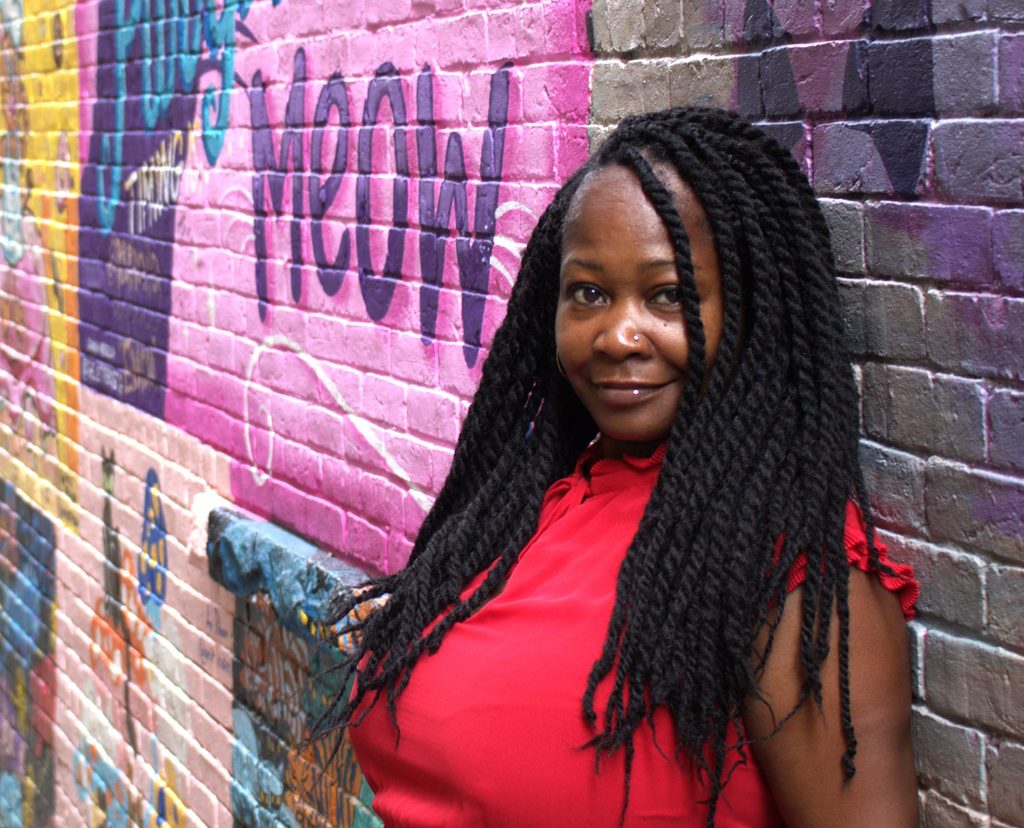
Headshot of Brandel France de Bravo

What do you like most about MOTHER, LOOSE?

I like its cohesion—the combination of poems inspired Mother Goose rhymes with poems about the death of my mother.

What did you have to overcome to publish it?

The poems in Mother, Loose were part of a larger manuscript that ultimately did not cohere. I, consequently, decided to pare down the full-length manuscript and turn it into a chapbook. While it was hard to let go of so many poems, I saw that there were two kinds of poems that needed to be brought to the fore and that could complement one another. Once I made the decision to focus on “mother” in its two forms, I wrote additional poems toward that theme. Some of these newer poems ended up being distillations from essays I’d written.

What do you hope people learn/experience from the book?

I hope that Mother, Loose helps people see some of their most primal fears in a new light. Nursery rhymes, Mother Goose rhymes, and fairy tales help elucidate, normalize and lighten the burden of those fears, at times making light of them. Humor is a form of intelligence, and dark humor shows us how to live with death.

Favorite interaction with a fan or reader?

I think my favorite interaction with a reader was with a reviewer, the writer, Hannah Rodabaugh. She wrote a wonderful review of Mother, Loose in Pank that made me feel seen—as though my poems had truly landed.

What are you working on now?

My second full-length book, Locomotive Cathedral, came out last year (March 2025). It was selected in the Backwaters Press contest and published by Backwaters Press, an imprint of the University of Nebraska Press. It had been ten years since Mother, Loose, so I had a blast doing readings and am pleased with the book’s reception. Right now, I’m finalizing a new collection of poems titled Fade Away & Radiate, which address or write toward what Buddhists call “the five remembrances” (e.g. this body is of the nature to age; I cannot escape aging). I’m still adding and removing poems and working on the order but I expect to be sending it out by the spring of 2026.

cover of Mother, Loose