Tell us the story of your Accents Publishing book, Sirens and Rain.
Sirens and Rain is a book of haiku and senryu (haiku-like poems focusing on human nature) about life in and around Philadelphia. People, animals, trees, fountains, statues, trains, life in all forms as it reveals itself in quintessential moments. With its unique variety of human and (other) natural phenomena, I have found this city to be an ideal place to write these “sketches from life.” The poems in this book came to me over a number of years—as I walked to work, taught my classes, rode my bicycle around the Schuylkill River, and otherwise encountered city life. (Note: the word “haiku” is both singular and plural; the same is true for “senryu.”)
What do you like most about it?
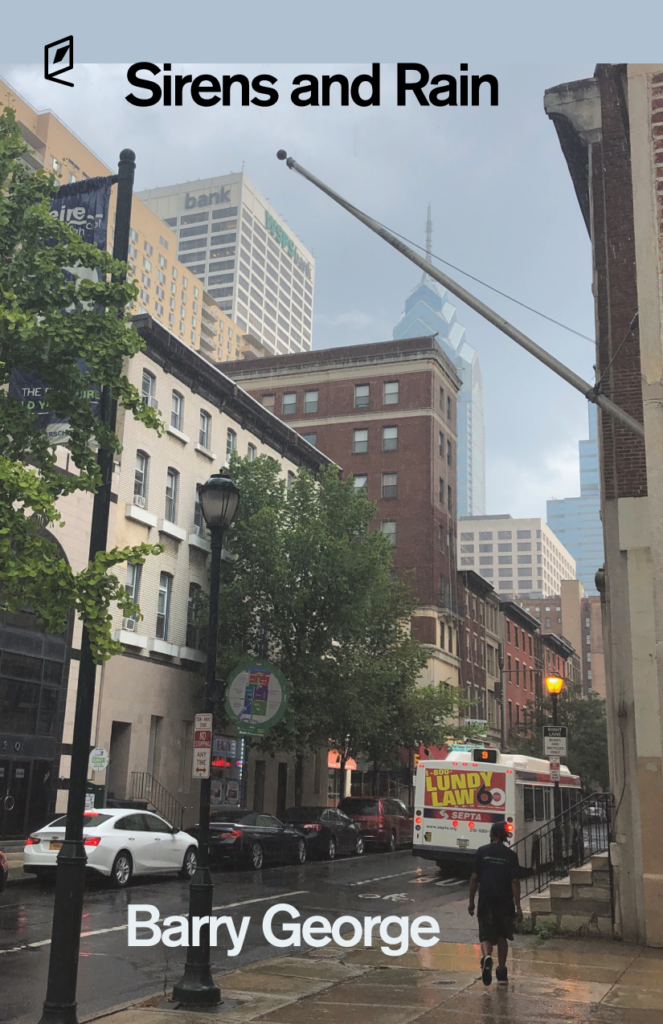
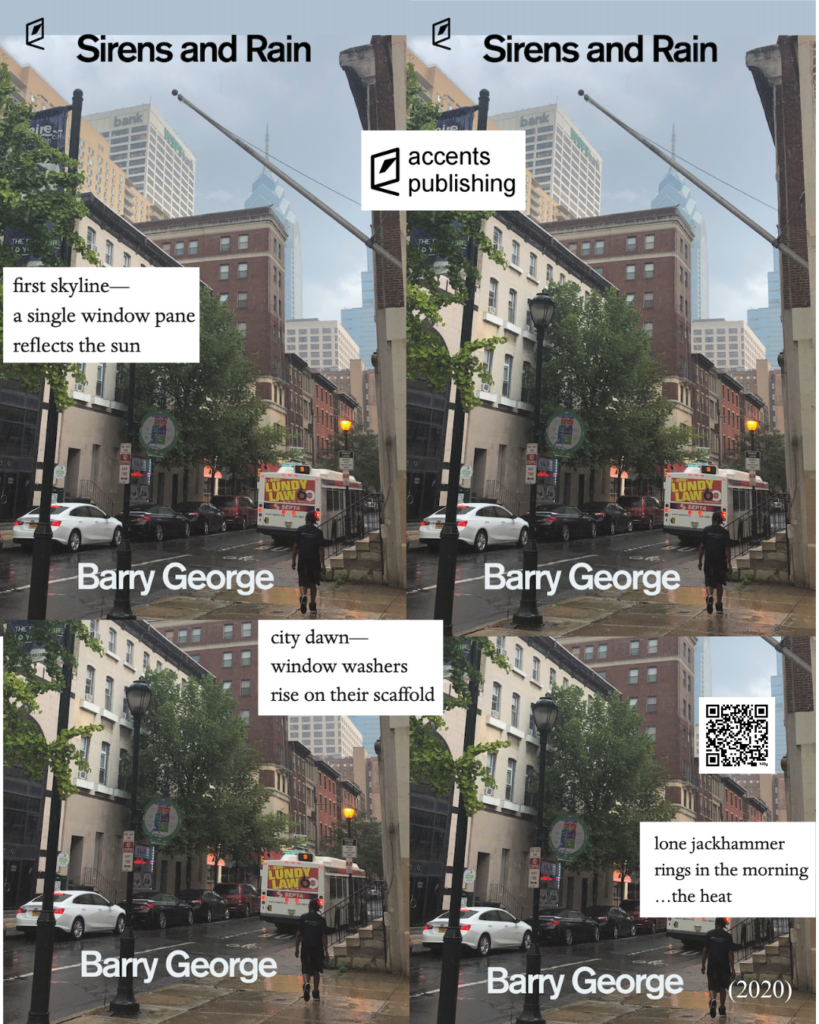
I like how the book is a history, in poetry, of what life was like for my wife, my cats, and me during the years we lived near the corner of 20th and Chestnut Streets. This is the intersection shown in the photograph I took for the cover. A few of the poems were written after we moved from there to another place just around the corner.
What did you have to overcome in order to finish and publish a book?
By the time I began working on the manuscript that became Sirens and Rain, I had plenty of haiku and senryu that could have conceivably been included. So the challenge was to select and arrange the best poems, or the best combination of poems, for the effect I wanted. Organizing by seasons helped; that way I could break the poems into five separate sequences (the four seasons plus a fifth chapter for late summer through early fall). In arranging the poems, I tried to juxtapose nature poems and people poems that played off one another in interesting ways. This entailed many rounds of revisions. You might say that the actual composing of the book was a matter of moving 3 X 5 cards around over and over again.
What do you hope people learn/receive/experience from reading your book?
As with haiku and senryu generally, I hope the poems in this book make readers more keenly, and in most cases more pleasurably, aware of what they encounter moment by moment in life. One of the best effects poems like these can have is to evoke for the reader a thought-feeling like, “Oh, I’ve had that experience—or seen that sight—a hundred times, but before never noticed it in all its beauty and wonder.” Or humor and charm, as the case might be.
What was your favorite interaction with a reader and/or a fan?
Because haiku and senryu can appeal so readily not only to poets and poetry enthusiasts but to folks who don’t often read poetry, I am always gratified when I learn that my brother-in-law, neighbor, landlord’s son, or high school Facebook friend “gets” and likes my poems. As for a specific interaction, I had an especially fulfilling one last fall when I visited a class that was reading Sirens and Rain as an assigned text for their Community College of Philadelphia literature course. Owing probably in no small part to how well their professor had guided their week-long study of my book, I found the students extremely engaged in and curious about writing haiku. They asked incisive questions. Then, in a kind of workshop format, I went around the room helping them with the short collections they were assigned to write. Almost to a person, perhaps TO a person, they were writing original haiku about subjects that mattered to them. As I left the classroom, literally, I felt a chill go down my spine. We had given a lot to one another.
What are you working on now? Catch us up one significant event in your life since the publication of Sirens and Rain.
The most significant recent event in my writing life is that I just finished the manuscript that is the successor to Sirens and Rain. Entitled “Unofficial Portraits,” it consists of haiku and senryu that portray people by focusing on a moment or detail that is especially revealing about each person’s character. As with Sirens and Rain, the subjects span a range of settings, including work, education, neighbors, law and politics, sports, and family.
Optional bonus question: Is there anything you want to get off your chest about writing or publishing?
Why aren’t haiku about sports (other than baseball) more widely appreciated? Not a particularly pressing question but a pet peeve of mine.